

TxDOT seeks input for Sealy Relief Route study
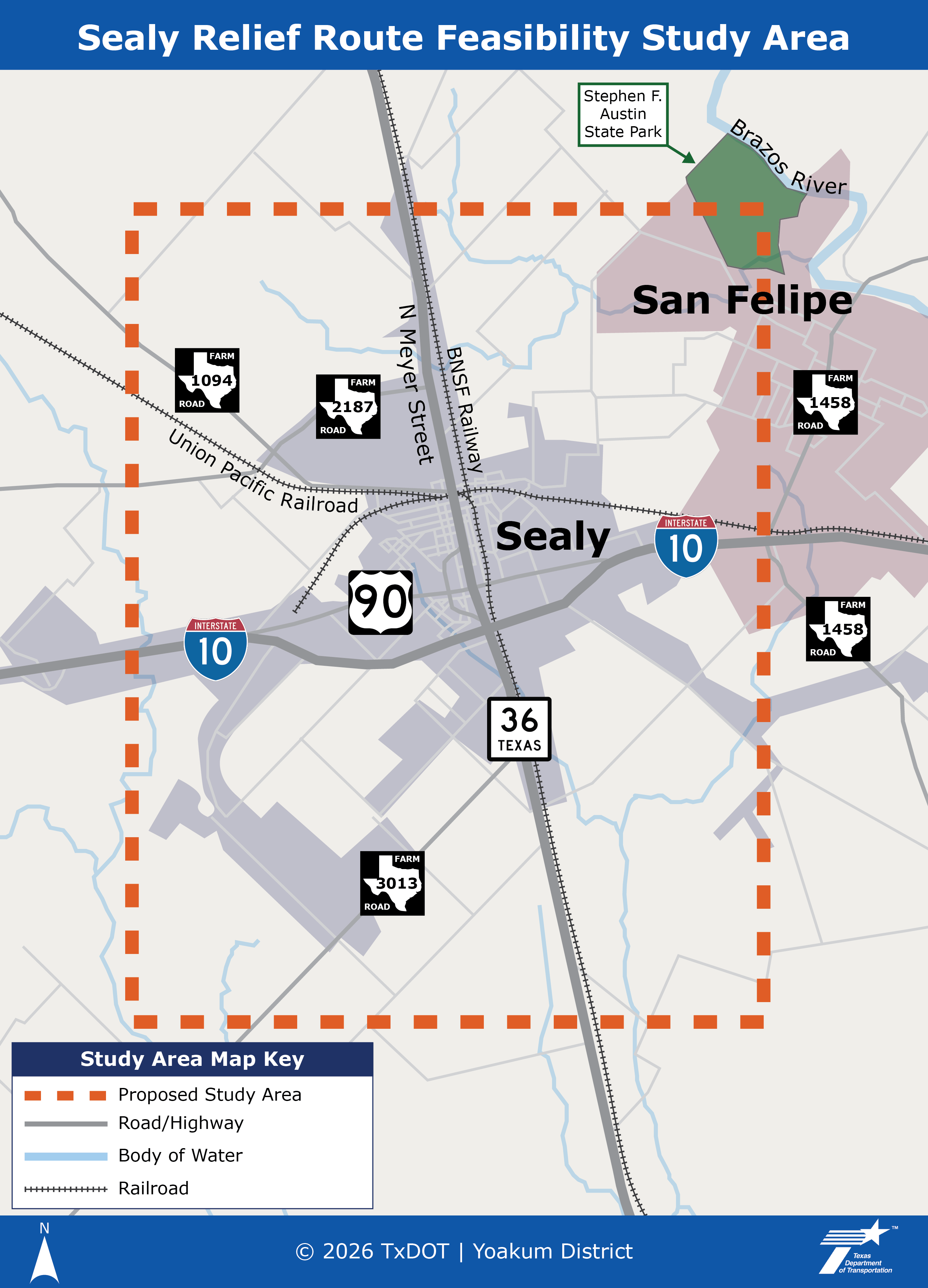
The Texas Department of Transportation held a Sealy Relief Route Feasibility Study meeting last week to explore a potential relief route around the city of Sealy. The purpose of the relief route is to help reduce congestion, while also improving safety and mobility.
The meeting allowed TxDOT to address any concerns to Sealy residents and allow them to send their questions to TxDOT over the possible relief route.
The existing State Highway 36 (SH 36) roadway north of Sealy is primarily four lanes with a center left-turn lane that merges into a four-lane divided facility with grassy median.
The existing SH 36 roadway south of Sealy is a four-lane undivided highway that merges into a two-lane undivided highway.
SH 36 is a major roadway that stretches from Freeport to Abilene. In Austin County, Texas, SH 36 serves as a key transportation route connecting towns like Sealy and Bellville. The highway plays an important role in local and regional travel, linking communities to major highways such as I-10.
Interim Typical Section: Two 12-foot-wide lanes, one in each direction, with 10-foot shoulders
Ultimate Typical Section: Four 12-foot-wide lanes, two in each direction, with 10-foot outside shoulders and four-foot inside shoulders and a depressed median
TxDOT presented a crash summary for SH 36 through Sealy from 2020 to 2024. During this time, there were 280 reported crashes along SH 36 from Jurica Road to FM 3013. A total of 28 crashes were identified as involving commercial motor vehicles. These crashes are represented on the map with purple pins, located primarily near the intersection of I-10 And SH 36. This data is a valuable tool for planning safer roads and protecting everyone who travels through the city of Sealy.
According to TxDOT, out of 28 crashes, two crashes involving commercial motor vehicles were classified as high-severity crashes. The most predominant contributing factors for commercial vehicle crashes were driver inattention and unsafe lane changing, followed by failure to control speed.
With the area showing impending growth, TxDOT believes traffic is growing along SH 36 within Sealy’s city limits. The Average Annual Daily Traffic (AADT) — essentially, how many vehicles travel the road each day on average. Back in 2015, over 12,000 vehicles used SH 36 daily. By 2025, that number has grown to over 16,000, and it’s projected to reach over 19,500 by 2035. Commercial traffic is also on the rise. In 2015, there were about 1,800 commercial vehicles using SH 36 daily. That number is expected to reach over 2,800 by 2035. This steady increase in traffic highlights the importance of planning for roadway improvements and safety measures.
An ultimate roadway typical section would include two 12-foot lanes in each direction with 10-foot outside shoulders and 4-foot inside shoulders. It would also include a depressed grassy median.
In addition to the existing roadway conditions and safety analyses, TxDOT examined constraints within the study area. This analysis provides additional factors to consider when developing potential solutions such as roadway improvements, realignment, or identifying an alternate route for truck traffic. This map identifies a variety of constraints TxDOT must consider such as biological, water, historical and community resources.
In addition to the environmental constraints, TxDOT must consider geographic and topographic constraints such as steep grades and land characteristics which can affect constructability and cost.
TxDOT offiicals stressed the Sealy Relief Route Feasibility Study is in the initial stage of the project development process. Should TxDOT choose to move forward with the development of alternatives identified through the feasibility study, a multi-year process will begin, which includes additional opportunities for the community to be involved and provide input. Advancement from step to step is contingent upon the outcome of the previous step and the availability of funding. A schedule for construction of the Sealy Relief Route has not been identified. This timeline includes many variables which are subject to change.
The feasibility study process will help TxDOT more clearly define potential improvements and identify financially and environmentally feasible options for improvements. TxDOT is currently in the process of collecting data.
TxDOT is seeking the public’s input and believes it is integral to that process. The next step in the process will be to develop conceptual designs and evaluate conceptual alternatives, then to present a preferred concept at a second public meeting anticipated in mid2026. The final step is to prepare the feasibility report, which is anticipated to be available in late 2026.
TxDOT stressed that feedback is an important component of this project. To be included in the official project documentation, all comments must be received or postmarked by Friday, Feb. 6.
• By email sent to Jonathan.Rogers@txdot.gov
• By postal mail sent to: TxDOT Yoakum District ATTN: Jonathan Rogers 403 Huck St. Yoakum, TX 77995
Or online by visiting www.txdot.gov, keyword search “Sealy Relief Route” and completing the online comment form. Following the public meeting and comment period, the project team will review all comments received, assess their feasibility for incorporation into the study and develop responses, which will be available online at TxDOT.gov once they have been prepared.
